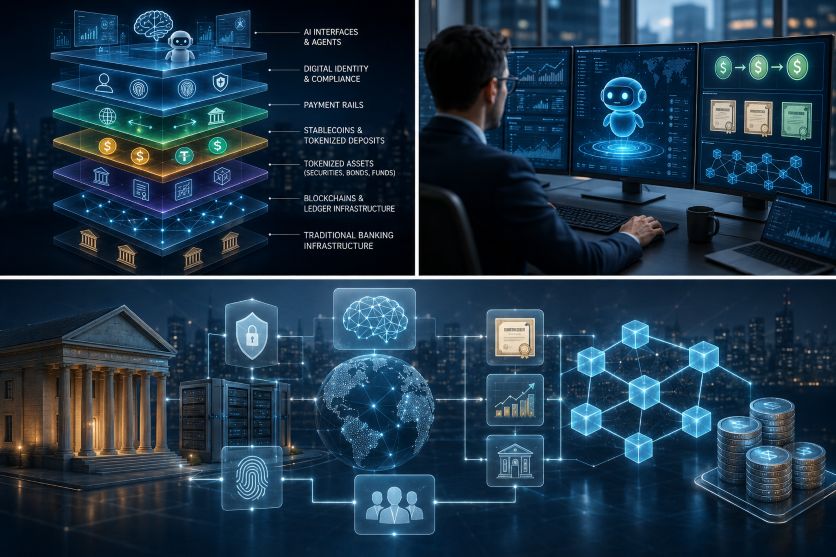
 The U.S. Securities and Exchange Commission proposed Regulation Crypto Assets on August 18, 2026, creating a proposed framework for certain investment contracts involving digital assets. The SEC said the proposal is designed to clarify how federal securities rules apply as crypto assets become more closely connected with traditional capital markets. The shift matters because the line between conventional securities and blockchain-based assets is becoming less distinct.
Tokenization sits near the center of that change. It means issuing a financial asset, or representing an existing one, as a digital token on a programmable network. Stocks, bonds, investment funds and other assets can potentially be represented this way. The Bank for International Settlements describes tokenization as combining information about an asset and its ownership with rules that can automate transactions.
What Changes When Securities Become Tokens?
Traditional securities already exist mostly as electronic records. However, ownership and transactions are generally managed through layers of brokers, custodians, exchanges, clearing organizations and central securities depositories.
A tokenized system can place more of these functions on shared digital infrastructure. Smart contracts, which are programs that execute predefined instructions, can automate processes such as transfers, interest payments or compliance checks. Research from the BIS has found that programmable systems could combine trading and settlement functions that are currently handled through several separate processes.
Settlement is one major attraction. A conventional trade can require several institutions to reconcile records before ownership and payment are final. Tokenized systems could allow the security and payment to move together. This could shorten settlement times and reduce some reconciliation work.
Traditional Infrastructure Is Starting to Meet Blockchain
The transition is unlikely to involve replacing the financial system overnight. Existing institutions are already experimenting with ways to connect established market infrastructure with blockchain networks.
In July 2026, the Depository Trust & Clearing Corporation announced that securities held at its Depository Trust Company had been converted into tokens and used in production trades. DTCC plans to launch its tokenization service in October 2026. The project illustrates how tokenization may develop as a bridge between existing custody systems and blockchain markets rather than as a completely separate financial network.
The potential benefits go beyond speed. Tokens can theoretically divide assets into smaller units, making fractional ownership easier to administer. Programmable rules could also automate distributions, ownership restrictions and other tasks. The Monetary Authority of Singapore has explored similar applications, including using smart contracts to automate parts of asset and portfolio management.
Where Does Tokenization Still Fall Short?
Moving securities onto blockchains does not remove financial risk. It can create new technical and legal questions.
- Custody systems must securely protect cryptographic keys and investor assets.
- Cyberattacks or faulty smart-contract code can create operational risks.
- Different blockchain networks may struggle to communicate with each other.
- Regulators must determine how existing investor protections apply to new infrastructure.
Interoperability is especially important. The BIS has warned that fragmented blockchain platforms can limit the benefits of tokenization when assets cannot move easily between networks. Tokenized markets will also need reliable links to conventional banking and settlement systems while both models continue to operate.
From Crypto Experiment to Financial Infrastructure
Tokenization is increasingly becoming a question about how financial markets themselves are built. The SEC’s August proposal does not create a complete rulebook for tokenized stocks and bonds, but it shows regulators adapting securities policy to markets where digital assets and traditional finance increasingly overlap.
The long-term result may be less dramatic than replacing Wall Street with blockchain. Existing exchanges, custodians and clearing institutions could instead adopt programmable technology behind the scenes. If regulators, financial institutions and technology providers can solve custody, cybersecurity and interoperability problems, tokenization could gradually change how ownership is recorded and how securities move. The real race is therefore about infrastructure, standards and trust, not simply putting familiar assets on a blockchain.